
WHAT IS FYLGJA?
A supernatural being in animal form.
A protector of your destiny. A mirror of your true nature.
For thousands of years, Norse people knew: we are bound to certain animals by soul, by fate, by invisible threads.

Your Soul's Companion
In ancient Norse and Germanic tradition, a Fylgja (plural: Fylgjur) was a supernatural being or spirit that accompanied a person throughout their life, connected to their fate, fortune, and essential nature.
The word comes from Old Norse, meaning "to follow" or "to accompany."
Your Fylgja was:
- • Personal: Unique to you, reflecting your character and destiny
- • Protective: A guardian of your fate and spiritual well-being
- • Revealing: Often visible to others in dreams or visions, showing your true nature
- • Powerful: Connected to your life force—if your Fylgja was harmed, so were you
Most commonly, Fylgjur appeared in animal form—though they could also manifest as female spirits or ancestral guardians.
Living Spirit,
Not Metaphor
Here's what makes Fylgja different from modern concepts like "spirit animals" or totems:
Your Fylgja wasn't something you chose. It chose you. It was with you from birth, an inseparable part of your spiritual identity.
It wasn't symbolic—it was real. In Norse belief, your Fylgja was an actual spiritual being, as real as you are. It could be seen by seers, shamans, and sometimes by ordinary people in dreams or liminal states.
It revealed your true nature. The animal form of your Fylgja wasn't arbitrary. A fox Fylgja suggested cunning and adaptability. A bear Fylgja indicated strength and protectiveness. Your Fylgja showed who you really were, beneath social masks.
It was connected to your fate. If someone saw your Fylgja, they could predict your future. If your Fylgja appeared weak or injured, it meant danger was coming. If it was strong and vital, your fortune was bright.

What Your
Fylgja Animal
Meant
In Norse tradition, powerful leaders and warriors often had large, fierce Fylgjur:
- Wolf: Independence, pack loyalty, wild freedom
- Bear: Strength, protection, groundedness
- Eagle/Raven: Vision, wisdom, connection to the divine
- Fox: Cunning, adaptability, quick thinking
- Deer/Stag: Grace, spiritual sensitivity, connection to forest realms
But your Fylgja didn't determine your worth – it revealed your nature. A mouse Fylgja wasn't "lesser" than a bear Fylgja. It simply meant you were clever, observant, and able to thrive in small spaces others overlooked.
The key was recognizing and honoring your Fylgja, not wishing it were something else.


How Fylgjur
Were Perceived
In the sagas and Eddas (Norse historical and mythological texts), Fylgjur typically appeared in three ways:
The most common way to see a Fylgja—your own or someone else's. Dream-visions of animals were taken seriously as messages about character and fate.
Fylgjur were often seen by others just before someone died, as the spirit prepared to depart. Seeing someone's Fylgja could be an omen.
Those with "the sight" (second sight, spiritual vision) could perceive Fylgjur while awake. This was considered a rare and powerful gift.
You couldn't see your own Fylgja easily. Like your shadow, it followed you but remained just out of direct view. You knew it through dreams, through animal encounters, through the consistent qualities that defined your life.
Ættarfylgja: The Clan Guardian
Some Fylgjur weren't personal but belonged to entire families or clans – called Ættarfylgjur (family followers).
These powerful spirits:
- • Protected the entire lineage
- • Passed from generation to generation
- • Could be seen by family members in times of great importance
- • Represented the collective strength and character of the family line
When someone in the family was about to inherit leadership or face a great challenge, the Ættarfylgja might appear to them in a vision, passing on the mantle of protection and power.
Reconnecting with
Ancient Wisdom
While we live in a different world than our Norse ancestors, the wisdom of the Fylgja tradition remains relevant:
Rather than "choosing" a spirit animal based on what we admire, the Fylgja tradition invites us to recognize what has always been with us. What animals have appeared repeatedly in your life? In dreams? In synchronicities?
Your Fylgja reveals your true nature – including parts you might hide from yourself. A fox Fylgja means embracing your cleverness (not dismissing it as "manipulation"). A deer Fylgja means honoring your sensitivity (not seeing it as weakness).
Living with awareness of your Fylgja means:
- • Noticing when that animal appears in your life
- • Honoring its qualities in yourself
- • Seeking its wisdom when facing challenges
- • Recognizing that you're never alone – your spirit guardian walks with you

Why I Paint Fylgjur
When I create a Fylgja painting, I'm not just depicting an animal. I'm creating a portal—a way for you to recognize, connect with, and honor your spirit guardian.
Each painting is:
Meditative in creation: Painted in a state of listening and receptivity.
Intentionally symbolic: The wings represent transcendence; the colors carry meaning
Energetically charged: Created in the same Danish landscape where Bronze Age spiritual art was born
Personally resonant: When the right painting finds you, you'll know
Living with a Fylgja painting means:
- • Daily visual reminder of your spiritual connection
- • Anchoring point for meditation and contemplation
- • Physical representation of your inner guardian
- • Art that works on you energetically, not just aesthetically
Which Animal Guardian
Resonates With You?

Fox Fylgja
Cunning & Adaptable Intelligence

Orangutan Fylgja
Wisdom & Patient Power

Calf Fylgja
Innocence & Gentle Strength

Wolf Fylgja
Authentic Voice & Wild Freedom
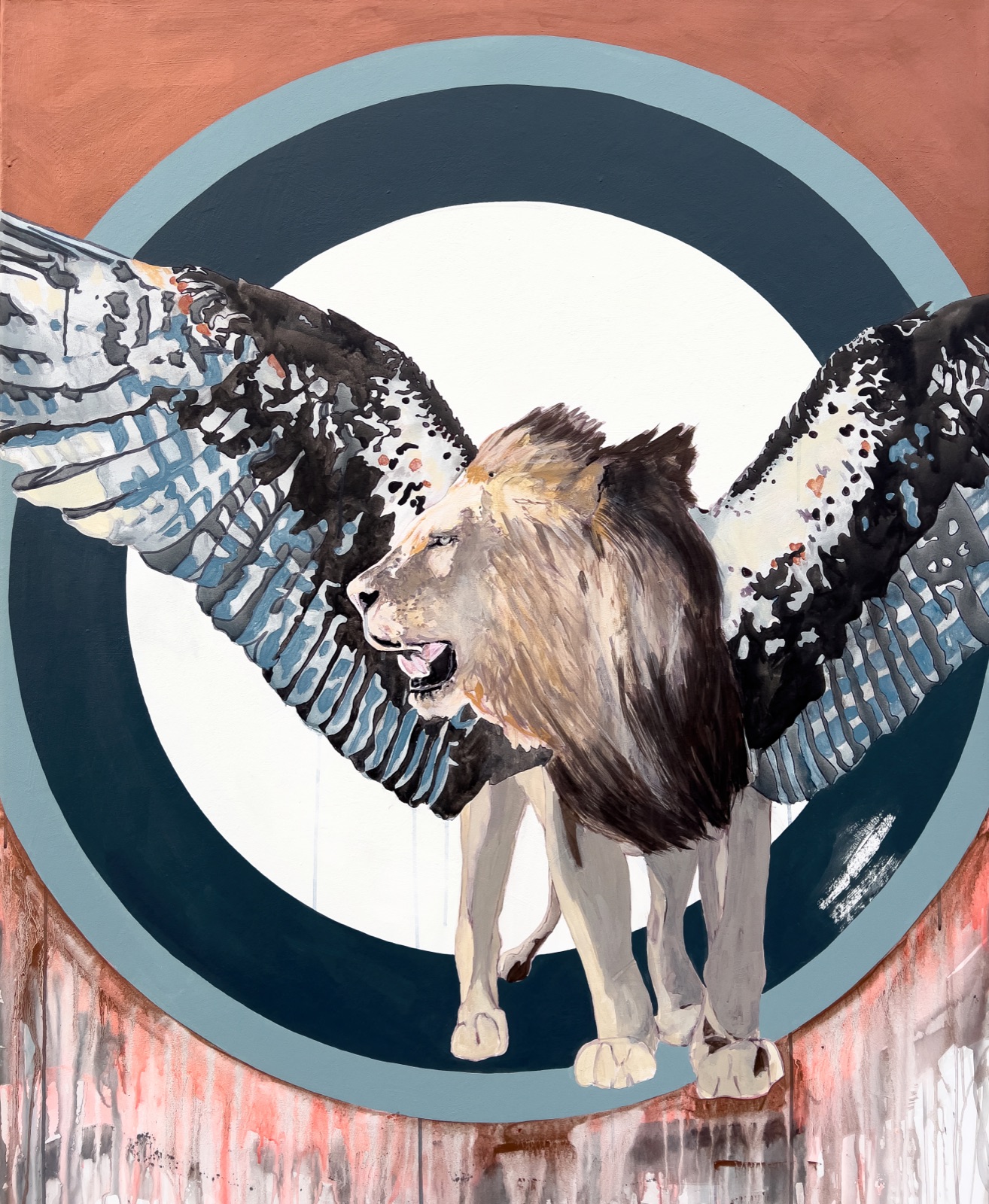
Lion Fylgja
Courage & Noble Leadership

Tiger Fylgja
Passion & Focused Power
Want to Learn
More?
- • The Poetic Edda (especially Helgakviða Hjörvarðssonar)
- • The Prose Edda by Snorri Sturluson
- • "The Road to Hel" by Hilda Roderick Ellis Davidson
- • "The Viking Way" by Neil Price
The concept of Fylgja appears in numerous Icelandic sagas including:
- • Völsunga saga
- • Gísla saga
- • Vatnsdæla saga
- • Njáls saga
